
The Cybersecurity Handbook, A to Z: A Teaching Guide for Beginners
Creator:
5.00 TND
100% Guarantee Safe Checkout

Build a working mental model of cybersecurity, module by module.
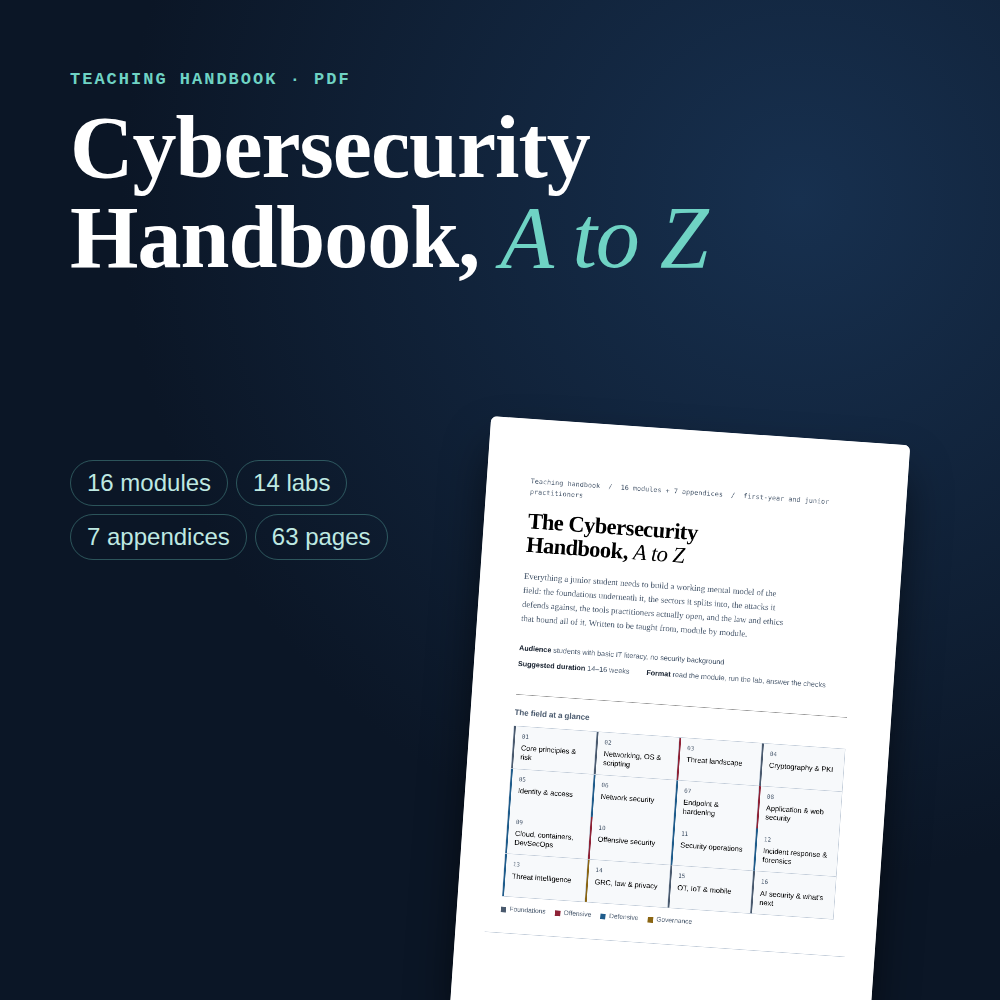
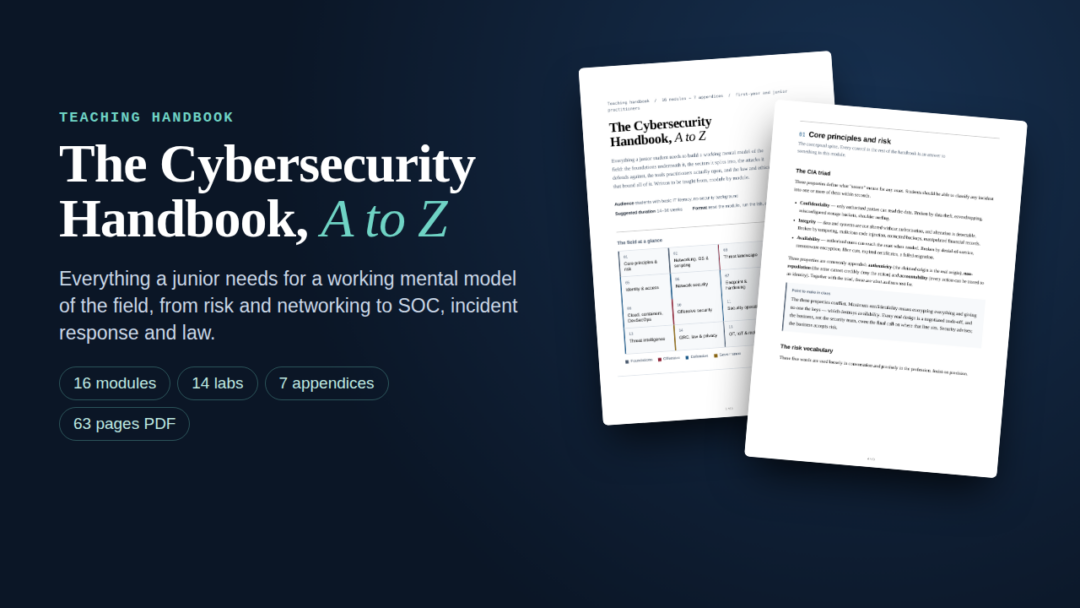
A 63-page teaching handbook for students and junior practitioners with basic IT knowledge and no security background. It covers the foundations, the attacks, the defences, the tools and the law, in the order you’d teach them.
What’s inside
- 16 modules: core principles and risk, networking and OS, threat landscape, cryptography and PKI, identity and access, network security, endpoint hardening, application and web security, cloud and DevSecOps, offensive security, security operations, incident response and forensics, threat intelligence, GRC and law, OT/IoT/mobile, and AI security
- 14 hands-on labs and comprehension checks with model answers
- A 14-week syllabus with a deliverable for each week
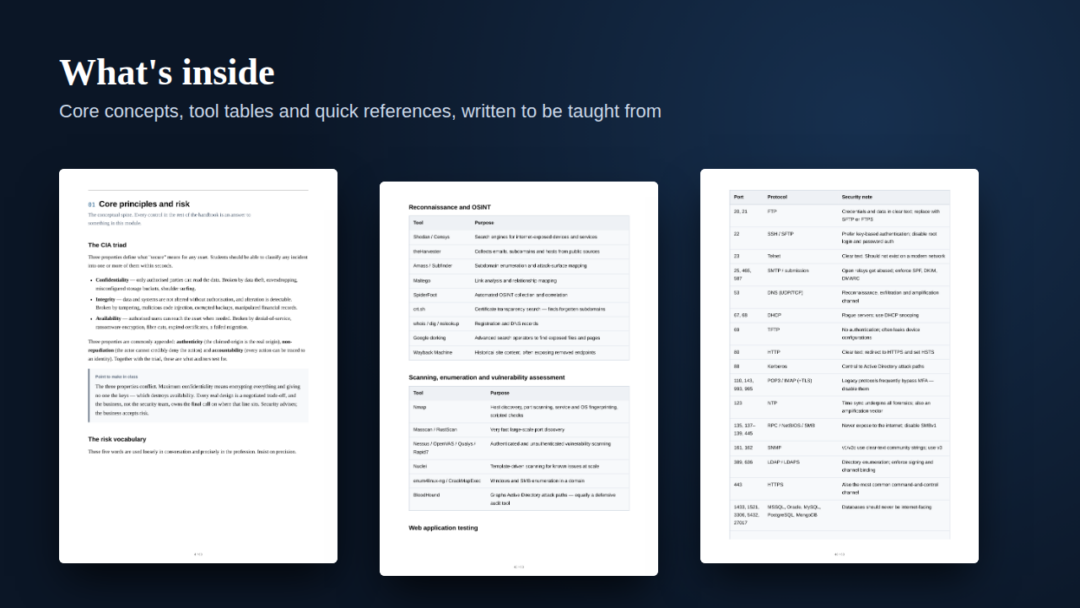
- 7 appendices: tool arsenal by job, ports and protocols reference, building a legal home lab, roles and certifications with a 12-month beginner plan, ethics and rules of engagement, a glossary, and a question bank with a capstone project
Every module follows the same shape: why it exists, core concepts, how it goes wrong, how it’s defended, tools, and a lab.
Who it’s for
- Students starting a cybersecurity or IT security course
- Self-learners building a first-year study plan
- Teachers and trainers who need a ready structure to teach from
Good to know
- It’s a conceptual and defensive guide. It contains no exploit code or attack payloads.
- Regulatory summaries are orientation, not legal advice. Check the law in your own country.
- Tool names and threat data change, so check the fast-moving parts before relying on them.
Format: PDF, 63 pages, instant download.
Categories:
Build a working mental model of cybersecurity, module by module.
A 63-page teaching handbook for students and junior practitioners with basic IT knowledge and no security background. It covers the foundations, the attacks, the defences, the tools and the law, in the order you’d teach them.
What’s inside
- 16 modules: core principles and risk, networking and OS, threat landscape, cryptography and PKI, identity and access, network security, endpoint hardening, application and web security, cloud and DevSecOps, offensive security, security operations, incident response and forensics, threat intelligence, GRC and law, OT/IoT/mobile, and AI security
- 14 hands-on labs and comprehension checks with model answers
- A 14-week syllabus with a deliverable for each week
- 7 appendices: tool arsenal by job, ports and protocols reference, building a legal home lab, roles and certifications with a 12-month beginner plan, ethics and rules of engagement, a glossary, and a question bank with a capstone project
Every module follows the same shape: why it exists, core concepts, how it goes wrong, how it’s defended, tools, and a lab.
Who it’s for
- Students starting a cybersecurity or IT security course
- Self-learners building a first-year study plan
- Teachers and trainers who need a ready structure to teach from
Good to know
- It’s a conceptual and defensive guide. It contains no exploit code or attack payloads.
- Regulatory summaries are orientation, not legal advice. Check the law in your own country.
- Tool names and threat data change, so check the fast-moving parts before relying on them.
Format: PDF, 63 pages, instant download.
Only logged in customers who have purchased this product may leave a review.
 Similar Products
 Similar Products









Business, Business Resources, Coaching & Training, Digital Products, Ebooks & Guides, Services & Consulting, Startup Tools
Launch Your Startup and Get the Startup Label
Price range: 19.99 TND through 69.99 TND


Reviews
There are no reviews yet.